The origins of kabaddi are believed to date back over 4,000 years. Some historians link the game to ancient Indian mythology, particularly stories from the Mahabharata, where similar concepts of strategic attack and defense were described. It is thought that kabaddi evolved as a way to develop physical strength, agility, and self-defense skills among warriors.
For centuries, kabaddi was primarily played in villages across South Asia as a recreational and competitive activity. Known by different regional namesu2014such as hu-tu-tu in India and kaudi in parts of Pakistanu2014the sport required minimal equipment and was often played on open fields. It became a symbol of strength, courage, endurance, and teamwork in rural communities.
Kabaddi began its transition into a structured sport in the early 20th century. Standardized rules were introduced in the 1920s, and the game was first demonstrated at the 1936 Berlin Olympics, bringing it to international attention.
In 1950, the All India Kabaddi Federation was formed to organize and promote the sport. Later, the formation of the Asian Kabaddi Federation helped expand kabaddi across Asia.

Kabaddi made its debut as a competitive sport at the 1990 Asian Games in Beijing, where it quickly gained popularity. Countries like India, Pakistan, Iran, Bangladesh, and South Korea emerged as strong competitors on the international stage.
In recent years, kabaddi has undergone a major transformation with the introduction of professional leagues. The launch of the Pro Kabaddi League in 2014 revolutionized the sport by introducing modern formats, media coverage, sponsorships, and global audiences. This significantly increased kabaddiu2019s visibility and commercial value.
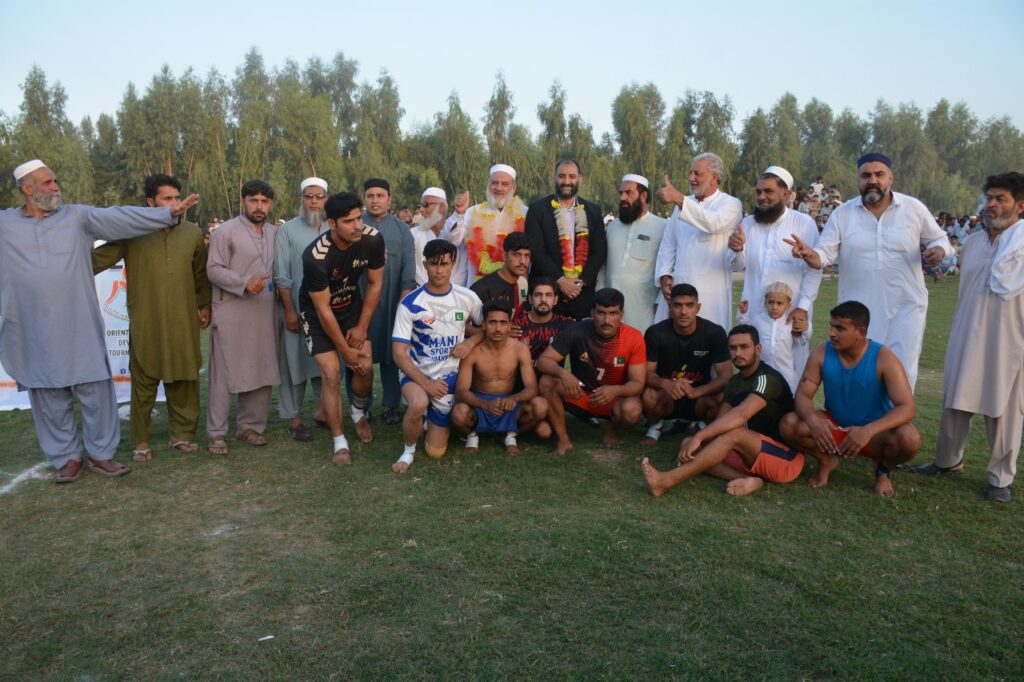
In Pakistan, kabaddi has long been a popular rural sport, especially in Punjab. Traditional styles like circle kabaddi are widely played. Pakistan has also been a dominant force in international competitions, particularly in circle-style kabaddi, winning multiple world titles.
Today, kabaddi is played in over 50 countries and continues to grow as a global sport. With increasing professionalization, international tournaments, and media exposure, kabaddi is evolving into a modern, competitive, and commercially viable sport while still preserving its rich cultural heritage.
kabaddiu2019s journeyu2014from ancient rural roots to international arenasu2014reflects a powerful blend of tradition, athleticism, and modern transformation.